







My short story “The Letter” has been awarded the Paris Review‘s Susannah Hunnewell Prize. I feel honored, grateful, and moved. Many thanks to the editorial committee! Please come celebrate at the Revel, the Paris Review’s annual fundraiser.

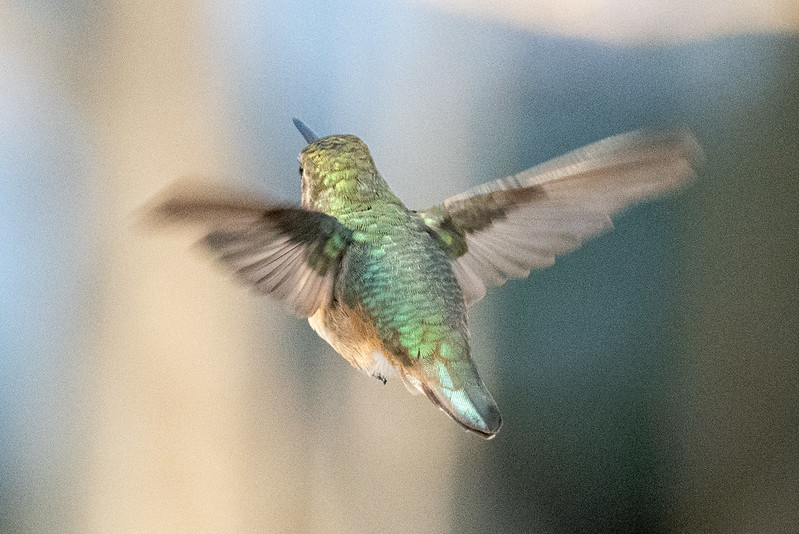


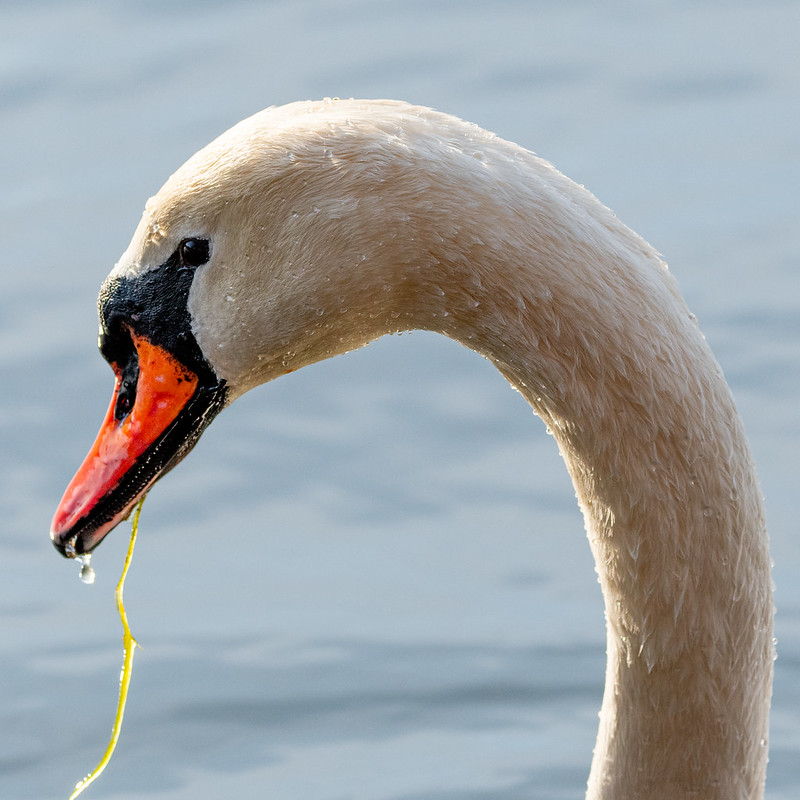


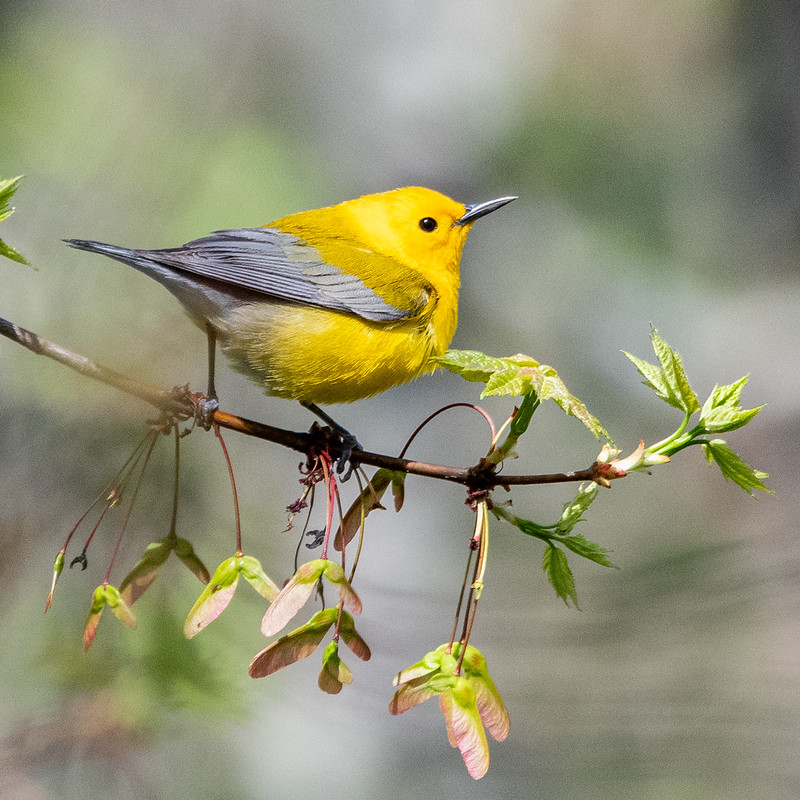
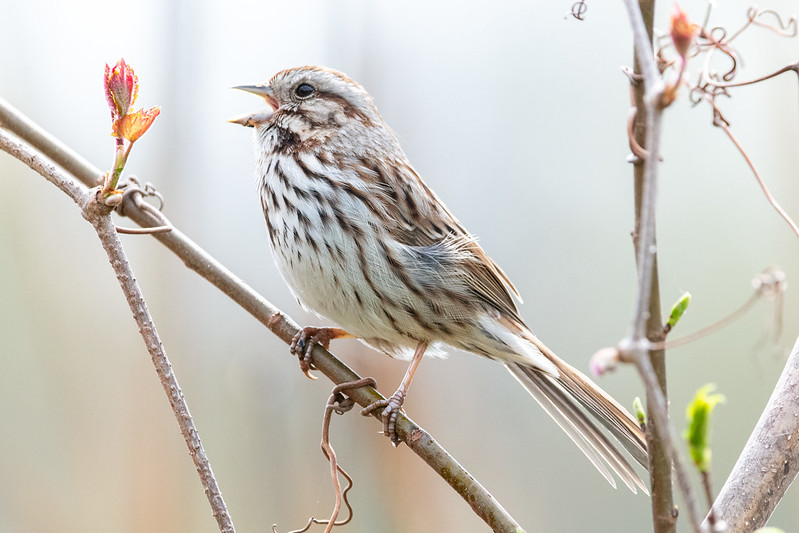
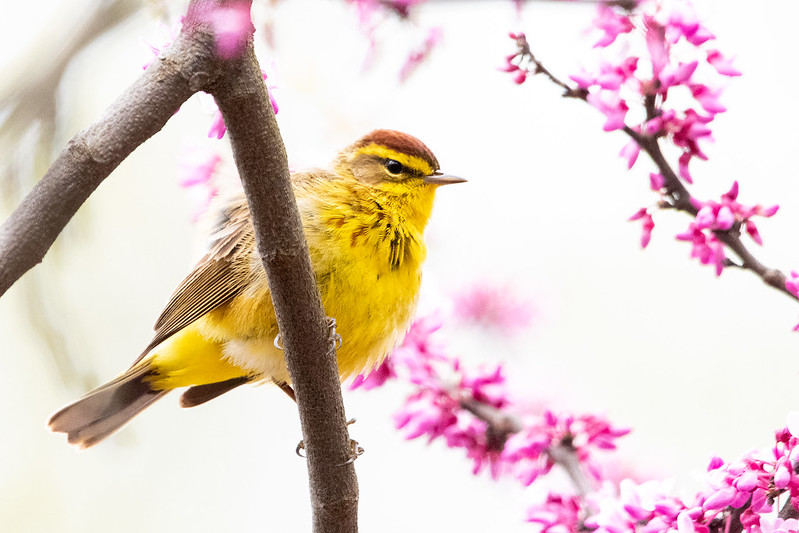
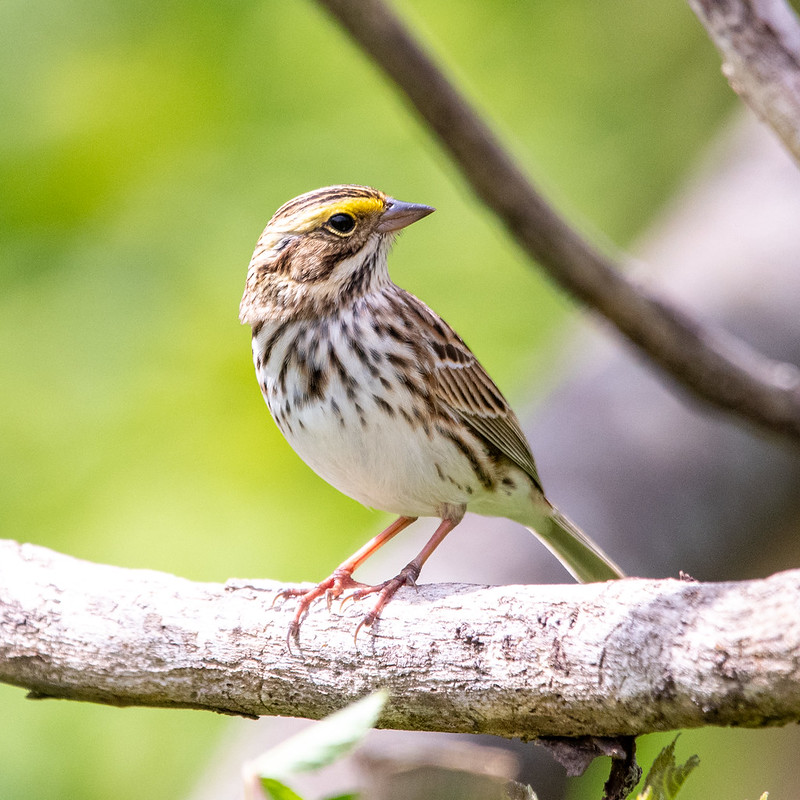
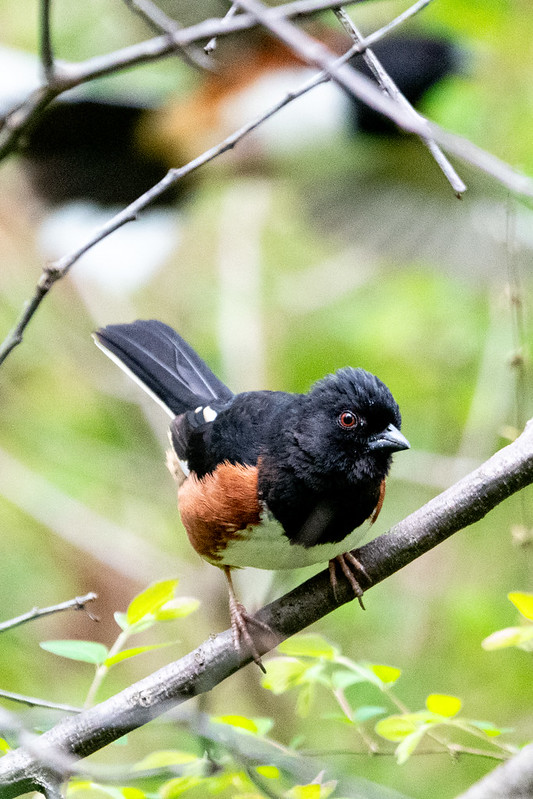
Prospect Park, 12 January and 17 & 18 February 2024
“I will have free speech at my meetings,” the statuesque teenage heiress Eugenia Malmains insists, in Nancy Mitford’s 1935 novel Wigs on the Green. Eugenia, a fascist, has been interrupted mid-harangue by her nanny, who thinks Eugenia is disgracing herself. Eugenia proceeds to threaten her nanny with violence: “Now will you go of your own accord or must I tell the Comrades to fling you out?”
From time immemorial, the rage of fascists has styled itself as more-grown-up-than-thou, but in feeling-tone it in fact more closely resembles that of teenagers—grandiose, spirally, counterdependent. If only we lived in a world where it was safe to believe that it was just as harmless! And if only the right little old lady could be found to tug every fascist down from her washtub. Further deflating fascism’s pretensions in this particular case: In Mitford’s novel, Eugenia is seen largely through the eyes of two gold-digging cads, Jasper Aspect and Noel Foster, who don’t take her politics very seriously (“batty” is the word one of them uses) because they regard her not as a person but as an opportunity to marry into the moneyed aristocracy.
“Oh! I think that’s all a joke,” a middle-class woman in the novel protests, when her left-wing bohemian-artist friends upbraid her for being swept up in the fascist excitement. But what kind of a joke is it, exactly? Some of the novel’s humor takes advantage of fascism’s abrupt rhetorical extremes. On several occasions, Eugenia calls for “jackshirt justice,” i.e., beatings or worse, but when a flapper heiress wants to ditch a husband who has grown tiresome, Eugenia insists on the sanctity of marriage. “Well, well, what a governessy little thing it is,” Jasper observes. Even from the distance of nearly a century, Mitford makes clear how hackneyed and familiar fascist language was, much as it has become to us in the past few years. “Let me see, where had I got to—oh! yes,” Eugenia resumes, once she has surmounted her nanny’s interruption:
Patriotism is one of the primitive virtues of mankind. Allow it to atrophy and much that is valuable in human nature must perish. This is being proved today, alas, in our unhappy island as well as in those other countries, which, like ourselves, still languish ‘neath the deadening sway of a putrescent democracy. Respect for parents, love of the home, veneration of the marriage tie, are all at a discount in England today, society is rotten with vice, selfishness, and indolence.
Viktor Orban could do no better. An idealized past? Check. A hearkening back to patriarchal morals? Check. A jeremiad against sexual sophistication? Check. Scorn for democracy? Check. Fetishization of patriotism and strength? Check. Not to mention indignant cries of “free speech” at even the mildest interruption.
Even the great replacement theory, as it is now called (aka racial purity, as it was known then), puts in an appearance, a few scenes later. When Jasper makes a casual reference to beautiful women and their lovers, Eugenia reproves him: “Under our régime, women will not have lovers. They will have husbands and great quantities of healthy Aryan children.” Also familiar is Eugenia’s persistent dunning of her audience. Fundraising may be done to MAGA followers by text message today but in the early 20th century, it had to be inflicted in person. “You are asked to pay ninepence a month, the Union Jack shirt costs five shillings and the little emblem sixpence,” Eugenia says, to almost everyone she meets, in almost every scene in which she appears.
Is it okay to laugh at all this? Humor has become suspect lately, because of rightwingers’ strategy of using it to normalize racist and misogynist ideas—dodging them past the moral censors under cover of unseriousness. It is true that Mitford plays Eugenia’s calls for violence, for example, for laughs only. Eugenia is always talked out of her momentary enthusiasms—her nanny is not actually ever beaten up—so her talk never has consequences, and the danger remains hazy.
Confusingly, if one turns to Mitford’s letters, one finds her claiming that her mockery of fascism was meant, of all things, fondly. The inspiration for the book, it turns out, was the avid fascism of two of her sisters, Unity and Diana. Unity signed letters, “Heil Hitler,” and wrote home swoonily from Munich about conversations with the Fuhrer, and Diana was to marry Oswald Mosley, the leader (or “Leader,” as he was styled by his followers) of the British Union of Fascists—a political party that Nancy, too, for a while joined, as Charlotte Mosley explains in her introduction to the 2010 (pre-Brexit, pre-Trump) Vintage paperback edition. Having written a novel satirizing her sisters’ fervor, Nancy faced some tricky family diplomacy. She boldly told Unity that the novel was “about you” and assured her that the portrait was so attractive that “everyone who has read my book longs to meet you.” At the end of another letter to Unity, however, she took the opposite tack and drew a caricature in which Unity’s head is labeled “bone” and her heart “stone,” while one of Unity’s hand holds an object labeled “rubber truncheon,” and a foot is shod in what is described as a “hobnail boot for trampling on jews.” Yikes. There’s nothing so openly anti-Semitic in Wigs on the Green, but the ugliness of the caricature reveals that in 1935, at least, Nancy either didn’t understand that the brutality in fascist rhetoric was eventually going to be realized, or didn’t much care so long as it looked as though the violence was going to be inflicted on people outside her family’s social circle.
By means of flattery and kidding, Nancy seem to have succeeded in jollying Unity out of being offended by the novel’s satirical portrait. Diana, however, was not so easy to placate. In an effort to appease her, Nancy removed nearly three chapters about “Captain Jack,” a character modeled on Oswald Mosley. (In the novel as published, the character appears only off-stage.) Far from arguing that her humor cuts fascism down to size, as a modern antifascist reader might hope, Nancy tried to convince Diana, in a letter written on 18 June 1935, that humor like hers couldn’t possibly do fascism any harm:
Honestly, if I thought it could set the Leader back by so much as half an hour I would have scrapped it, or indeed never written it in the first place. The 2 or 3 thousand people who read my books, are, to begin with, just the kind of people the Leader admittedly doesn’t want in his movement. . . . I still maintain that it is far more in favour of Fascism than otherwise. Far the nicest character in the book is a Fascist, the others all become much nicer as soon as they have joined up. But I also know your point of view, that Fascism is something too serious to be dealt with in a funny book at all. Surely that is a little unreasonable?
Appeasement seems not to have worked. After the novel’s publication, Diana kept Nancy at a distance for years.
The awkward truth seems to be that Nancy was to some extent complicit with fascism when she wrote Wigs on the Green, thanks to family ties, personal history, and, to put it politely, thoughtlessness. But she went on appreciate fascism’s threat more keenly. In 1940 she wrote to the Foreign Office that Diana, though a British citizen, should be imprisoned as a Nazi sympathizer, and Diana was in fact imprisoned. In 1943, Nancy wrote again, to urge the government not to release her sister yet—she was still too dangerous. Half a dozen years after the war, she told Evelyn Waugh she was ruling out a reprint of Wigs because humor about Nazis, including her own, couldn’t at that point be in “anything but the worst of taste.”
Is it tacky that I enjoyed her disowned novel anyway, even though (because?) we’re currently living through a resurgence of fascism? Much of the book’s humor is Waughian: comely young heroes and heroines, some of them sickeningly rich, have spines too weak to resist louche and alcoholic pleasures; practically the only devoir they can manage with rigor or regularity is the application of face cream. The fascism in the novel could almost be incidental, if the contrast between the Jazz Age demoralized irony and fascism’s grotesque earnestness weren’t so perfect. As Nancy suggested in her 1935 letter to Diana, her crowd is what fascism defined itself against: dissipated, cosmopolitan, promiscuous. Despite Nancy’s attempts to butter up her sisters in private, it’s clear who she sides with in the novel: the hopeless sophisticates are us, and the fascists, them.
Maybe what I enjoyed was that the novel allowed me to visit a time before fascism was world-historical—before it had murdered so many people that it had to be taken seriously. In the world of Wigs, it still seems as if, were you to point out with sufficient perspicuity how laughable fascism is, its devotees might blink a few times and walk away, wondering what they had been thinking.
The worst possibility is that humor about fascism is a sort of sundial of history. A big question weighing on me lately is where we are in the cycle—toward the end or still only at the beginning? What if I’m able to laugh at Mitford’s novel now because we’re only at the dawn of the current outbreak, and some day, when its shadow has lengthened, I, like the author, won’t be able to find it funny any more?
“. . . to live like a soldier but not as a soldier, figuratively but not literally, to be allowed in short to live symbolically, spells true freedom.” —Thomas Mann, Confessions of Felix Krull, Confidence-Man
“The art of life, of a poet’s life, is, not having anything to do, to do something.” —Henry D. Thoreau, Journal, 29 April 1852
“I think she regarded my career as akin to a religion she didn’t understand but would of course respect.” —Siobhan Phillips, Benefit, describing how a scholar of English literature feels she is perceived by a former classmate who has gone into consulting
“She neither embroidered nor wrote—only read and talked.” —Henry James, “A London Life”
“And so for me the act of writing is an exploration, a reaching out, an act of trusting search for the correct incantation that will return me certain feelings whenever I want them. And of course I have never completely succeeded in finding the correct incantations.” —Thom Gunn, “Writing a Poem,” Occasions of Poetry
“. . . so I went on leisurely, as a trifling man does, sometimes writing a sentence—then taking a turn or two—and then looking how the world went, out of the window . . .” —Laurence Sterne, A Sentimental Journey
“You talk like a Rosicrucian, who will love nothing but a sylph, who does not believe in the existence of a sylph, and who yet quarrels with the whole universe for not containing a sylph.” —Thomas Love Peacock, Nightmare Abbey
“. . . for beauty with sorrow / Is a burden hard to be borne . . .” —Walter de la Mare, “The Old Summerhouse,” in Reading Walter de la Mare, ed. William Wootten
Species observed: 166 (down from 229 in 2022)
Birding checklists: 91 (152)
Photos posted: about 358 (743)
Lifers (species first seen in 2023): Northern saw-whet owl, marsh wren, Northern harrier, Lapland longspur, Swainson’s hawk, Western meadowlark, swallow-tailed kite, anhinga, broad-winged hawk, Bicknell’s thrush, black scoter, common tern, purple gallinule, dunlin, black-chinned hummingbird, American woodcock, great horned owl
(Ones that weren’t just bird photos or links to items published elsewhere)
“Marginalia”
“More entries in an online commonplace book”
“My new body, three years later”
“A novelist visits the Trump Presidential Library”
“Readings” (26 June)
“Other means”
“Readings” (25 August)
“The most dangerous intelligence”
“Infinitely fine”
Read to the end: 49
Abandoned: 5
Blurbed: 1
“Re-reading Raymond Carver,” The Paris Review Redux newsletter, 25 June 2023
Some products of the eighties are immortal, I realized the other night, while I was listening to the Pet Shop Boys and thinking about Raymond Carver’s short story “Careful.”
“Lost Letters,” The Paris Review Daily, 21 July 2023
Maybe I had read this story before and repressed it, the way Elizabeth Bowen’s heroine represses the memory of her skeleton clock?
Deadlift, 1-rep max: 290 lbs. (up from 225 lbs. in 2022)
Back squat: 240 (205)
Front squat: 160 (145)
Overhead squat: 88 (63)
Shoulder press: no 1-rep max recorded
Push press: 145 (not recorded in 2022)
Push jerk: 145 (115)
Power snatch: 83 (73)
Power clean: 135 (130)
Clean & jerk: 145 (115)
Bench press: 185 (155)
M3gan
Winged Migration (2003)
Showing Up
Are You There, God? It’s Me, Margaret
Guardians of the Galaxy, vol. 3
You Hurt My Feelings
Spider-Man: Across the Spider-Verse
Past Lives
Asteroid City
Indiana Jones and the Dial of Destiny
Barbie
Shortcomings
Oppenheimer
Passages
Killers of the Flower Moon
Afire
Priscilla
Coach to Vienna (1966)
Anatomy of a Fall
May December
The Wonderful Story of Henry Sugar
Maestro
The Holdovers
Godzilla (1954)
American Fiction
Die Hard (1988)
As will surprise no one, I am at heart a very basic sci-fi nerd, with bursts of highbrow pretension. There must have been more old movies, but this list is reconstructed from datebooks, ticket receipts, and inadequate memory.
“Sallies,” New York Review of Books, 9 February 2023
In the afternoon four black-throated blues
Tossed themselves up from the pavement at nothing.
“Pemaquid Lighthouse Revisited,” The Atlantic website, 13 August 2023
This is a place we don’t seem to mind returning to
after the dog, without him, maybe because
it looks like time made walkable.
(Ones that were new to us, and that we liked)
Bombay frittata
Black lentils with crispy onions and labne
Rosemary white beans with frizzled onions and tomato
Buttered salmon with red onions, capers, and dill
Coconut fish and tomato bake
Za’atar roasted tofu with chickpeas, tomatoes, and lemon tahini
Mattar paneer
Sweet potato hash with tofu
Of The Dissident by Paul Goldberg, New York Times Book Review, 6 June 2023
Weirdly, after a third character is ax-murdered, he, too, is posthumously revealed to have been gay. These fellows should be more careful!
Of Day by Michael Cunningham, New York Times Book Review, 13 November 2023
If the kindness between Cunningham’s characters stretches beyond strict verisimilitude, it’s part of their charm.
Of The New Life by Tom Crewe, New York Review of Books, 7 December 2023
Sex in Crewe’s novel, it turns out, is not so much an object of recovery as a touchstone that helps the story bridge the interval of time separating Symonds’s era from ours—the functional equivalent of a spring day, the same in 2023 as in 1894, adjusting a month or so for climate change.
“The Ellipse Maker,” n+1, spring 2023
In another house, one is a different person, but at first one doesn’t always know who.
“The Letter,” The Paris Review, summer 2023
The paper that the letter inside was written on was college-ruled, with blue lines. Fringe ran down the left edge, where it had been ripped out of a spiral notebook.
“Keats at Twenty-Four,” The New Yorker, 11 December 2023
Maybe he had come to prefer things that resisted being brought to an end, that could be repeated or extended as long as one wanted. Birding. CrossFit. The scroll of a feed. Sometimes it seemed as if all the habits of his middle age had this character.
“Recognition,” McSweeney’s, December 2023
Away from Brooklyn, he discovered, not only did no one seem to know how he, personally, lived, but the writing life was so largely a matter of fantasy that no one even seemed capable of guessing what it was really like.
Hours of my one and only precious life, wasted: innumerable (but not on Twitter, at least)